heim
Build a full local library of LLM models, then run, chat, and serve them — entirely on your own hardware. Discover models from Hugging Face, Ollama, and LM Studio, pull them into one library on a drive of your choosing, and serve any of them through an OpenAI-compatible API and a browser chat UI.
flowchart LR
    hf["HF cache"] -->|heim library pull| lib
    ol["Ollama"] -->|heim library pull| lib
    ls["LM Studio"] -->|heim library pull| lib
lib["Library on your drive<br/>gguf/ · mlx/ · cards + metadata"] -->|chat / serve --ui| rt["llama-server / mlx_lm.server<br/>OpenAI /v1 "]Proprietary, source-available
heim is not open-source. Copyright (c) 2026 Morten Hansen, all rights reserved
(see LICENSE). The source is
published for reference and evaluation; running it requires a written license — contact
morten@winterop.com. Install is from source with uv (there is no pip install heim);
see Getting started.
Why
- One library, everywhere. A single, format-organized library on an external or cloud drive — move it by changing one setting.
- Run anything, uniformly. GGUF via llama.cpp, MLX via
mlx_lm— both behind one OpenAI-compatible endpoint, so any client attaches the same way. - Local and private. Nothing leaves the box. Built to pair with tool/MCP use by small local models.
Quick taste
uv sync
heim library ls                       # your library (the models on your drive)
heim library sources                    # models in app caches you could pull
heim library pull lmstudio <name>       # pull one into the library (--move to relocate)
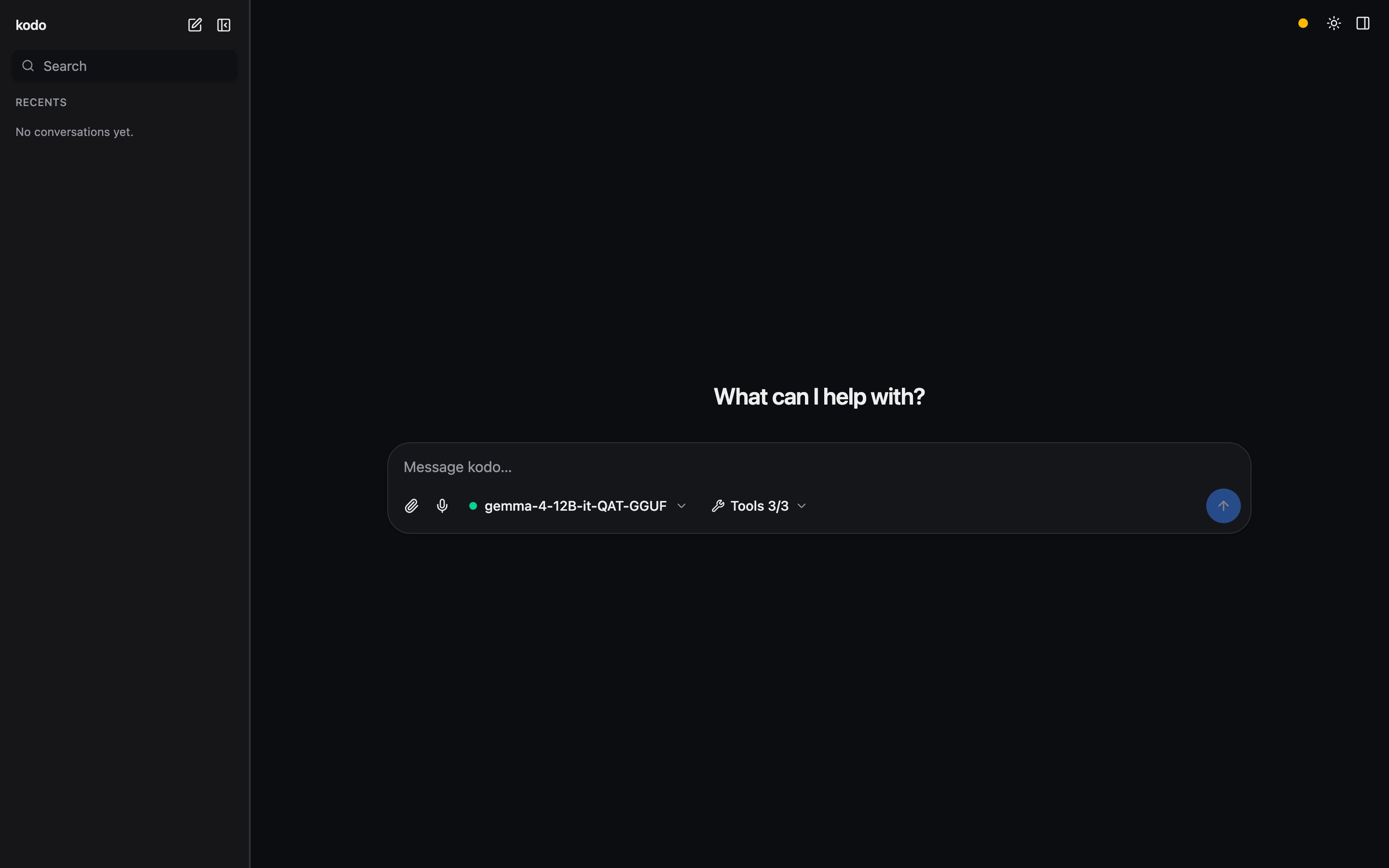
heim serve --ui                 # browse + chat in the browser
heim chat <name> -p "hello"     # one-shot, scriptable answer
make run MODEL=<name>           # backend + browser UI, locked to one model
Start at Getting started, or jump to the CLI reference.
The name
heim is short, easy to type as a command, and deliberately neutral — it collides with nothing (no PyPI package, no product, no brand), which is the safest kind of name. If you want a meaning, read it as 鼓動 (kodō) — Japanese for heartbeat / pulse: the steady pulse of your own models, running on your own hardware.